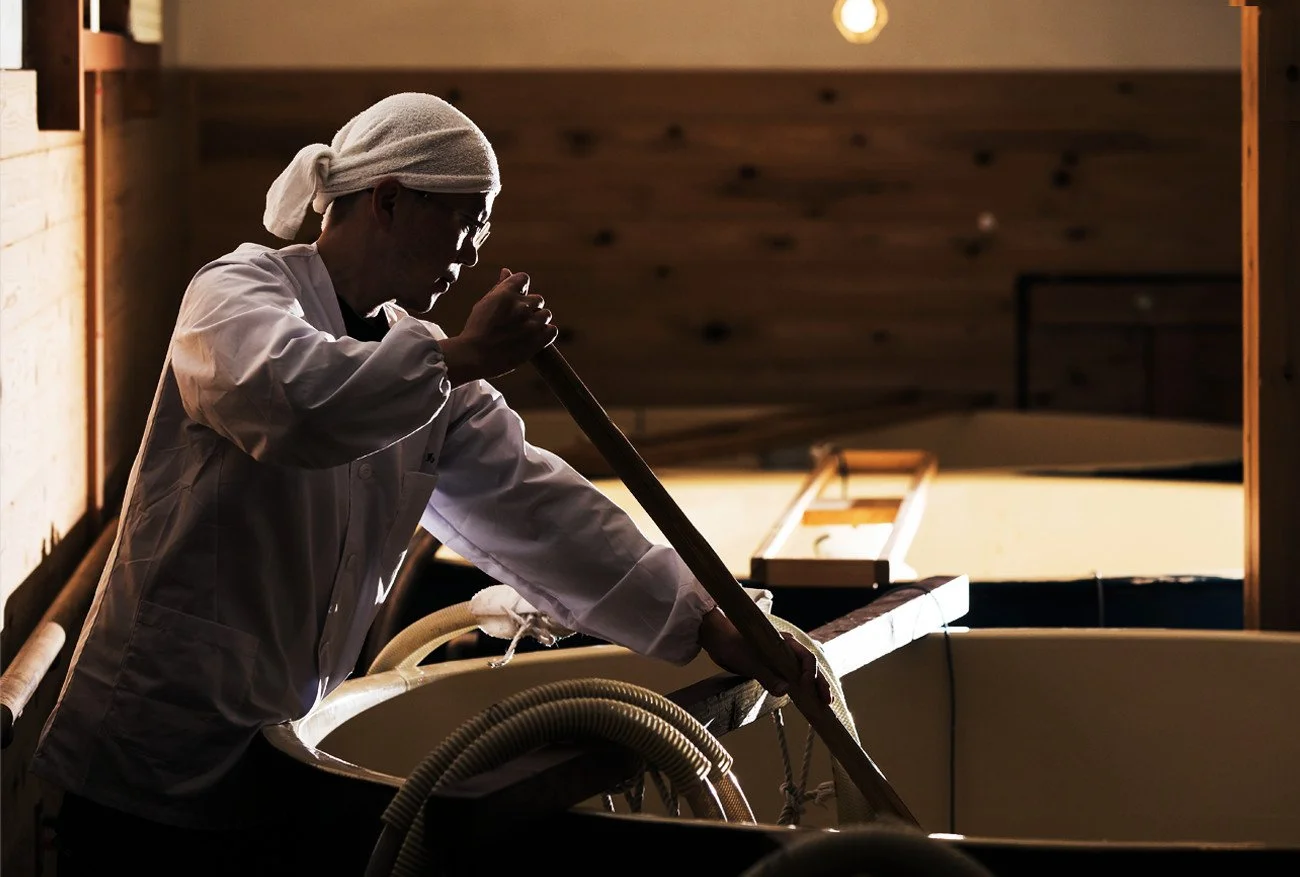
Stirring a tank of sake at Shimaoka Shuzo. Image courtesy of Shimaoka Shuzo
Shimaoka Shuzo
Est. 1863
In 2006, fire tore through Shimaoka Shuzo, a small sake brewery that had stood in Ota City, Gunma, since 1863. Toshinobu Shimaoka, the sixth generation of his family to run the kura, seriously considered closing for good. Buildings and tanks could be replaced. What worried him was something you can’t buy: the two strains of natural lactic acid bacteria that had lived in the brewery for generations and made its traditional yamahai sake possible.
Fortunately, the brewery had kept samples of those strains. Once the kura was rebuilt, they were reintroduced into the new brewery, where they took hold once again, and production carried on. So did the method Shimaoka Shuzo has followed since its founding: kimoto-style yamahai, a slow, demanding way of raising the yeast starter that relies on the winter cold and on the lactic acid bacteria living in the brewery itself. It takes skilled brewers, careful temperature control and plenty of time, and it produces sake with a firm backbone and deep, savory flavor.
Shimaoka came to the family business by a roundabout path. After university he worked for a company in Tokyo, then studied brewing at Japan’s national brewing research institute in Hiroshima before returning home to take over. Today he is both president and toji, and he keeps things deliberately small: about 500 koku a year, or roughly 90,000 liters, a scale he says lets the people working there actually enjoy the craft. He compares sake making to traditional arts like lacquerware and pottery, keeps the lineup short, and steers clear of trendy ingredients.
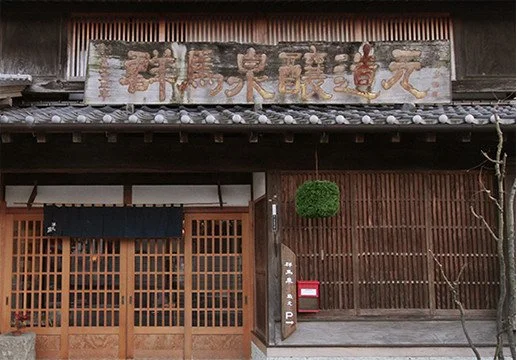
The front of the brewery in Ota City. Image courtesy of Shimaoka Shuzo
The brewery’s sake rests on three things: the yamahai method, rice grown in Gunma (about 70% of its sake uses the local Wakamizu variety), and patience. Most of its regular sake ages in tank for one to two years before bottling, something few breweries did when Shimaoka started. The well water, fed by springs from Mount Akagi, is relatively hard by Japanese standards, which keeps the sake stable as it matures. Shimaoka describes aging as polishing a rough stone: time doesn’t add flavor so much as wear away the sharp corners, leaving a good stone with real character.
For all that tradition, he has little interest in advertising it. He doesn’t care to print terms like “wild yeast” on his labels, and jokes that he doesn’t even need to write “yamahai.” His standard is simpler: “As long as it turns out delicious, that’s all that matters.” He would rather hear a neighbor say “it’s cheap, but it’s good” than sell a bottle on a marketing claim, and he wants his sake to leave you a little warmer and more at ease, like a bowl of homemade miso soup at the end of a long day. Sake on its own, he says, isn’t the whole experience; it should always leave room for food.
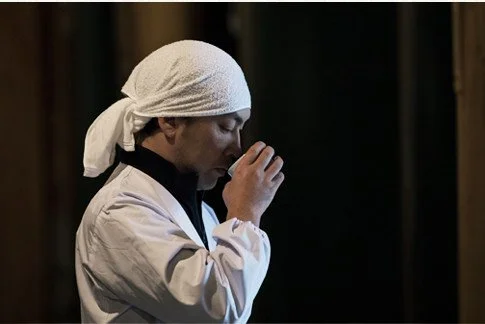
Image courtesy of Shimaoka Shuzo
“進化はしても、変化はしない。
Evolve, but never change.”
From Shimaoka Shuzo in Ota City, Gunma Prefecture, comes an unabashedly traditional yamahai junmai made for the dinner table. Labeled chotokusen ("super special selection"), it is the brewery's top junmai: locally grown Wakamizu rice polished to 50%, far beyond what a junmai requires, brewed by the slow, labor-intensive yamahai method and matured for a rich, mellow character. The result is a light-bodied yet concentrated sake that truly comes alive when warmed.
Tasting Notes
It pours a shimmering pale gold, with a deep, earthy nose of rich, loamy soil. Chilled, it is clean and quietly reserved, with a hint of roasted carrot and a short, dry finish. Shochu fans will find something familiar here. Warm it up and the sake opens: the flavor grows more expressive and spreads across the palate while staying light and easy to drink. We strongly recommend serving it warm, ideally in a ceramic cup.
Food Pairings
A true food sake for traditional Japanese cooking and cold winter nights. Our favorite match is oden with a dab of sharp karashi mustard: picture a narrow standing bar, a friend or two, and a warm cup before heading home. Also excellent with chanko nabe and other hearty stews, dried squid, shime saba with shiso leaf, and nigiri like squid, ikura and tobiko. Earthy root-vegetable dishes work beautifully too. Best poured with the meal, a few bites in.
Specs
Classification: Junmai, Yamahai (Chotokusen)
Rice: Wakamizu (grown in Gunma)
Polishing Ratio: 50%
Sake Meter Value: +3
Acidity: 1.7
Alcohol: 15.5%
Serving: warm (recommended), room temperature or chilled
Prefecture: Gunma
Size: 720ml
Note: the US importer's back label reads "Junmai Daiginjo Genshu." The brewery classifies this sake as a junmai.
The Brewery
Founded in 1863, Shimaoka Shuzo is a small, family-run kura in Ota City, in eastern Gunma, brewing about 500 koku a year under the Gunma Izumi label. Today it is led by Toshinobu Shimaoka, the sixth generation of his family, who serves as both president and toji. After working for a company in Tokyo, he studied brewing at Japan's national brewing research institute in Hiroshima before returning home to take over the kura. Since its founding, the brewery has made nearly everything by the traditional yamahai method, relying on natural lactic acid bacteria that live in the brewery itself; those house cultures even survived a fire in 2006. Relatively hard spring water from Mount Akagi gives the sake its round texture and helps it age gracefully, and most bottlings rest one to two years before release, which brings depth and the brewery's signature golden hue.
See the brewery